
by Wayne Graham
This article was published in the Spring 2026 issue of our newsletter.
This column details unique solutions operators come up with every day to problems large and small. Below are several cases of operators finding solutions, saving money, and making life at their second home—the treatment plant—a little easier.
Chemical Pump Monitoring
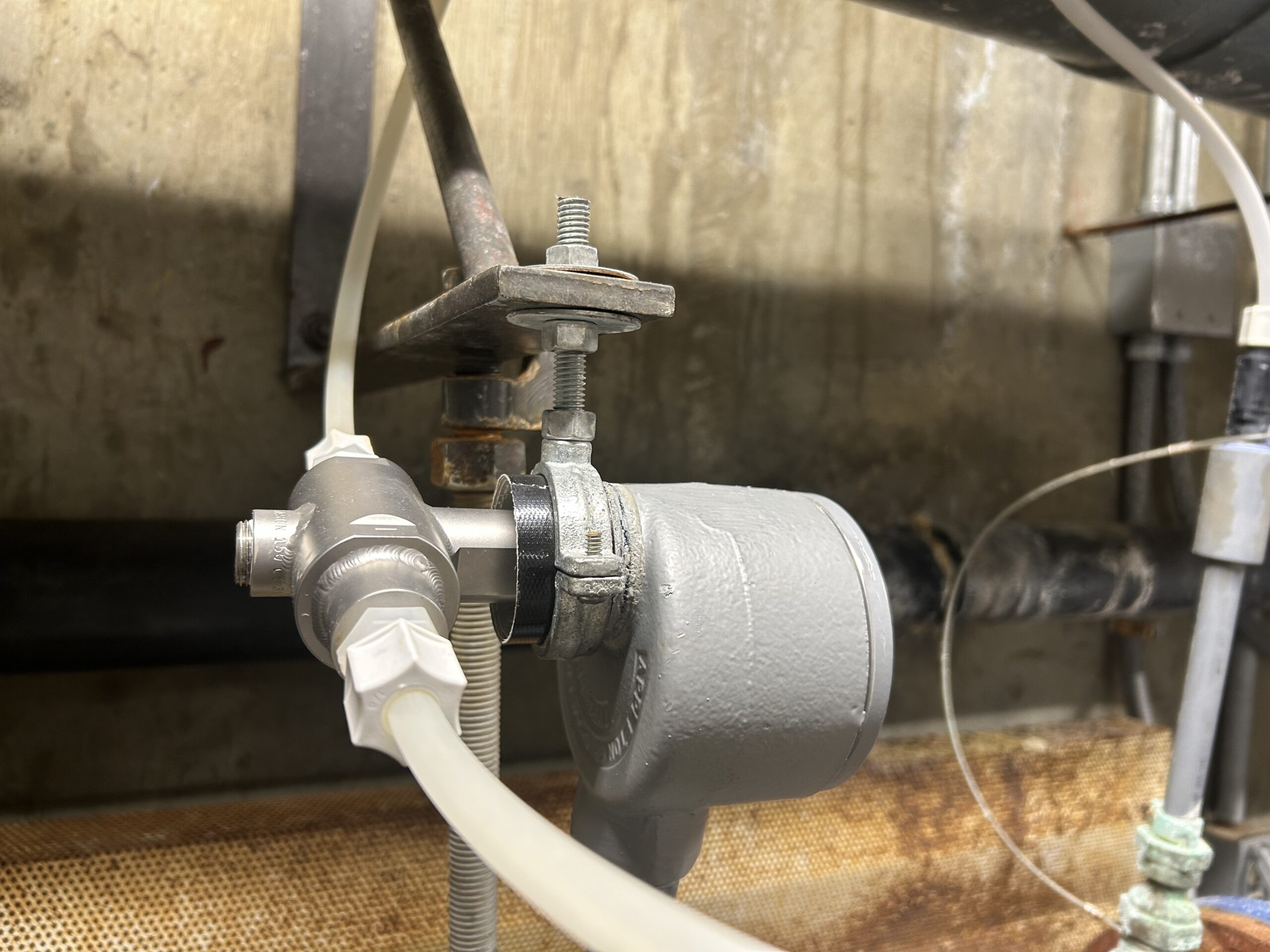
I love going to visit John and Jeff at the Wilmington WWTF. Every time I do, I get subject matter for this article! To ensure that their disinfection system is delivering chemicals to the chlorine contact tank, they have installed a pressure sensor to monitor that the metering pumps are actually moving liquid. The operators receive an alarm if the sensor detects an issue. There are several manufacturers of this equipment, reach out to me if you want some information.
St. Johnsbury operators use a different approach to pump failure issues. If a tube fails on their peristaltic chemical feed pumps, the pump shuts off and the backup pump automatically starts.
Push Camera Nozzle
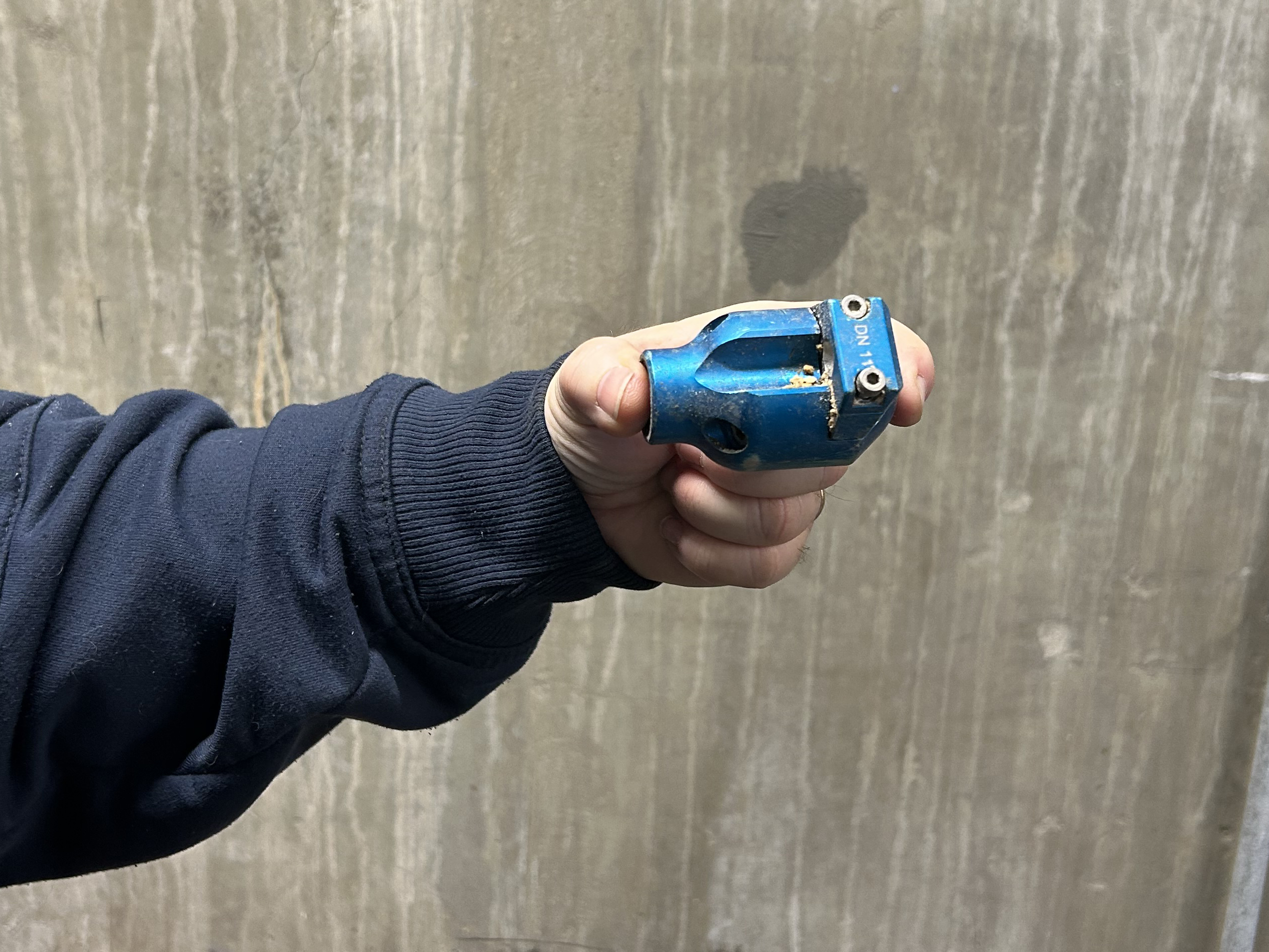
While still at the Wilmington WWTF, John was excited to show me a new tool that he knew I would be interested in: a push camera nozzle. Anyone who has ever tried to get a push camera more than 150 feet through a sewer line will appreciate this one. The device goes on the end of your jetter, and allows you to attach a push camera head to it so you can pull the camera head the full length of the sewer line. These are custom made to your jetter hose size, pressure and capacity. Give me a shout if you want more details and contact information.
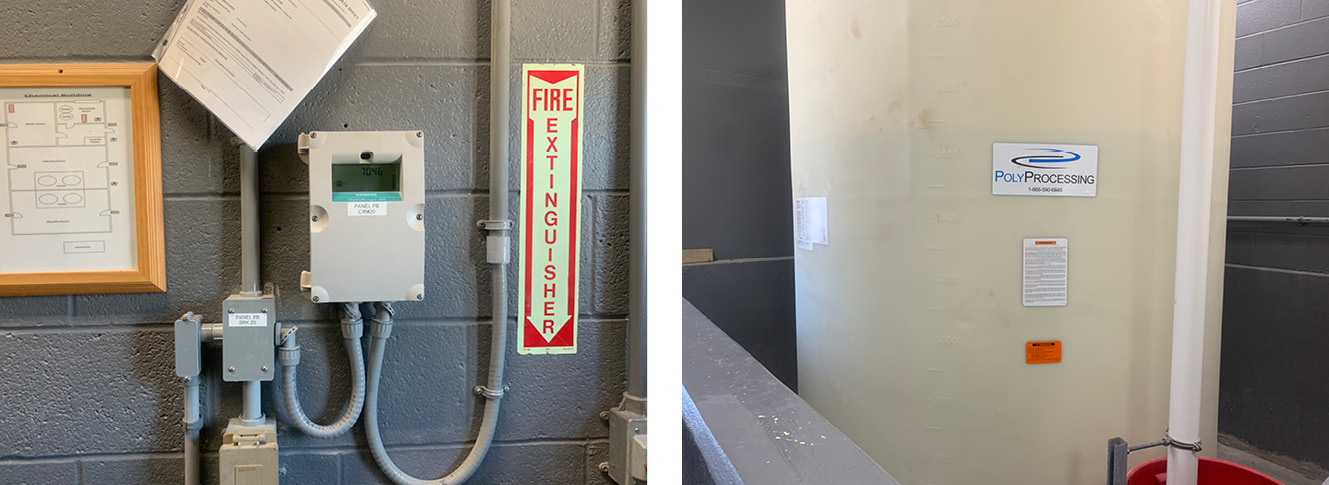
Ultrasonic level unit (left) and chemical tank located within leak-proof concrete containment walls.
Chemical Room Upgrades
The Rutland WWTF has added a few custom chemical room features. They use ultrasonic sensors to measure the chemical levels in their storage tanks. This accuracy is especially useful with larger diameter tanks. They have also sealed the chemical containment walls with a chemical resistant coating, ensuring no leaks if the containment was ever needed.
Send your interesting ideas to me for future columns. I also encourage you to tour other facilities and share ideas; you will find that networking with other operators can be very beneficial. Several organizations can also help: VT WARN, GMWEA, VT Watershed Management Division, and of course, Vermont Rural Water!
Stay safe out there, we need you!