
by Forest Anderson
This article was published in the Spring 2026 issue of our newsletter.
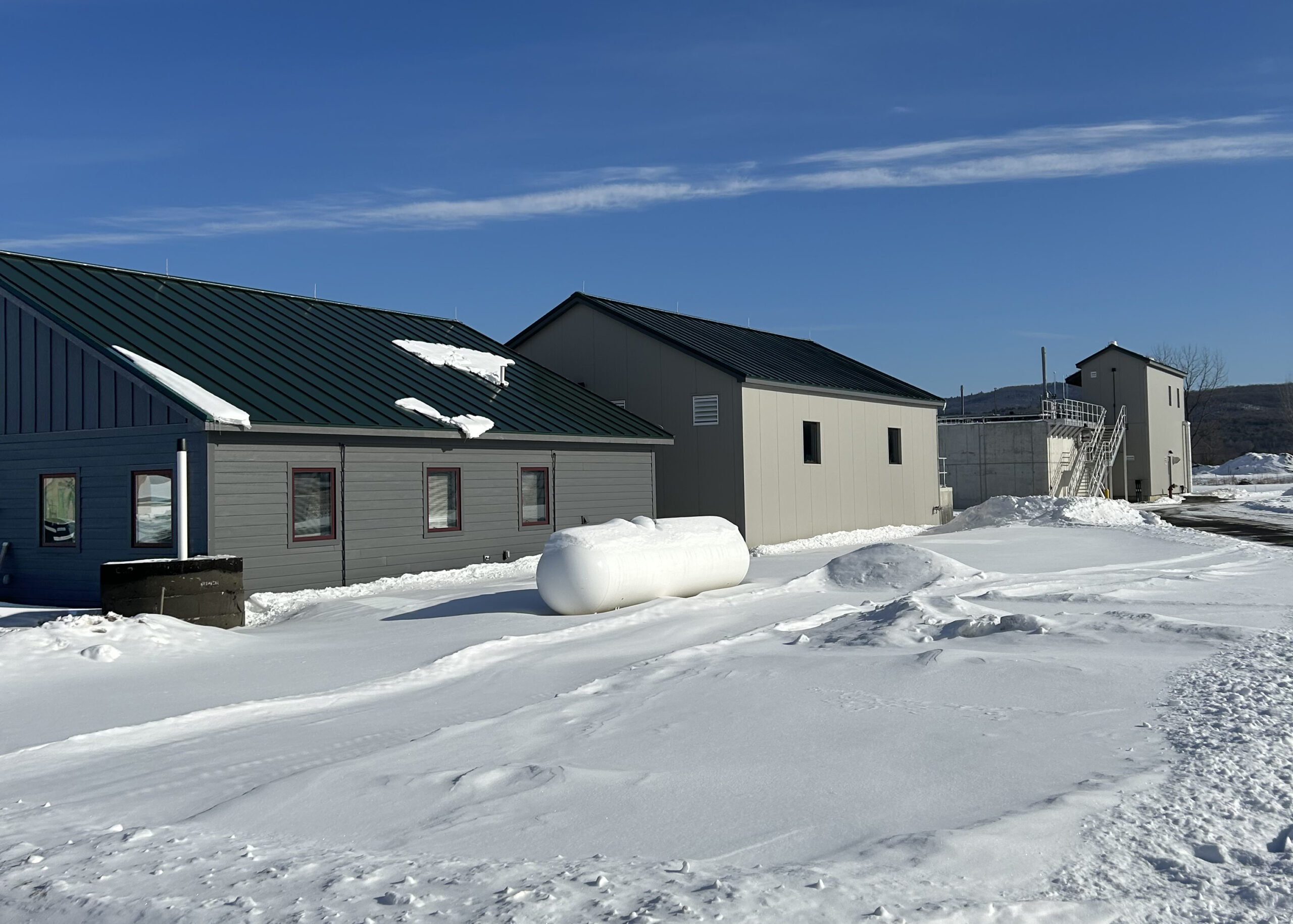
The new treatment facility on a snowy February morning.
If you drove past Hinesburg’s new wastewater treatment facility on any given night during those first few weeks of operation, you might have noticed a light on in the control room. That was John Alexander, the chief operator, watching over the plant like a new parent hovering beside a crib.
There were no ribbon cuttings when the new Sequencing Batch Reactor went live in December, just a brief mention in the town manager’s report and the quiet hum of equipment on the outskirts of town doing exactly what it was designed to do. But behind that seamless transition was John, who had spent many early mornings and late evenings monitoring every stage of the process, studying the computer screens that tracked aeration cycles, settling times, and effluent quality in real time.
“I love this job,” John said during a recent tour of the facility. “I want to finish out my career here.”
That kind of dedication doesn’t come from nowhere, or from just anyone. After seven years of planning and four years of construction, John understood that the plant’s first weeks would determine whether all that work had been worth it. The old lagoon system—with four open ponds where solids settled and bacteria slowly break down waste before chlorination, ultimately being discharged into the LaPlatte River—has served Hinesburg for decades. But between the desire for community growth and the State issuing stricter discharge limits, demanding drastic reductions in phosphorous and ammonia, the town had no choice but to upgrade.
The $19 million facility that rose from the footprint of those old lagoons represents the largest infrastructure project in Hinesburg’s history. Engineers from Aldrich & Elliott spent years designing a system that could meet modern standards while accommodating the town’s growing population. Construction crews battled wet clay sixty feet underground, inserting wick drains and hauling in mountains of sand to stabilize the soil. Town manager Todd Odit secured nearly $9.4 million in grants and zero-interest loans to keep the project financially afloat.
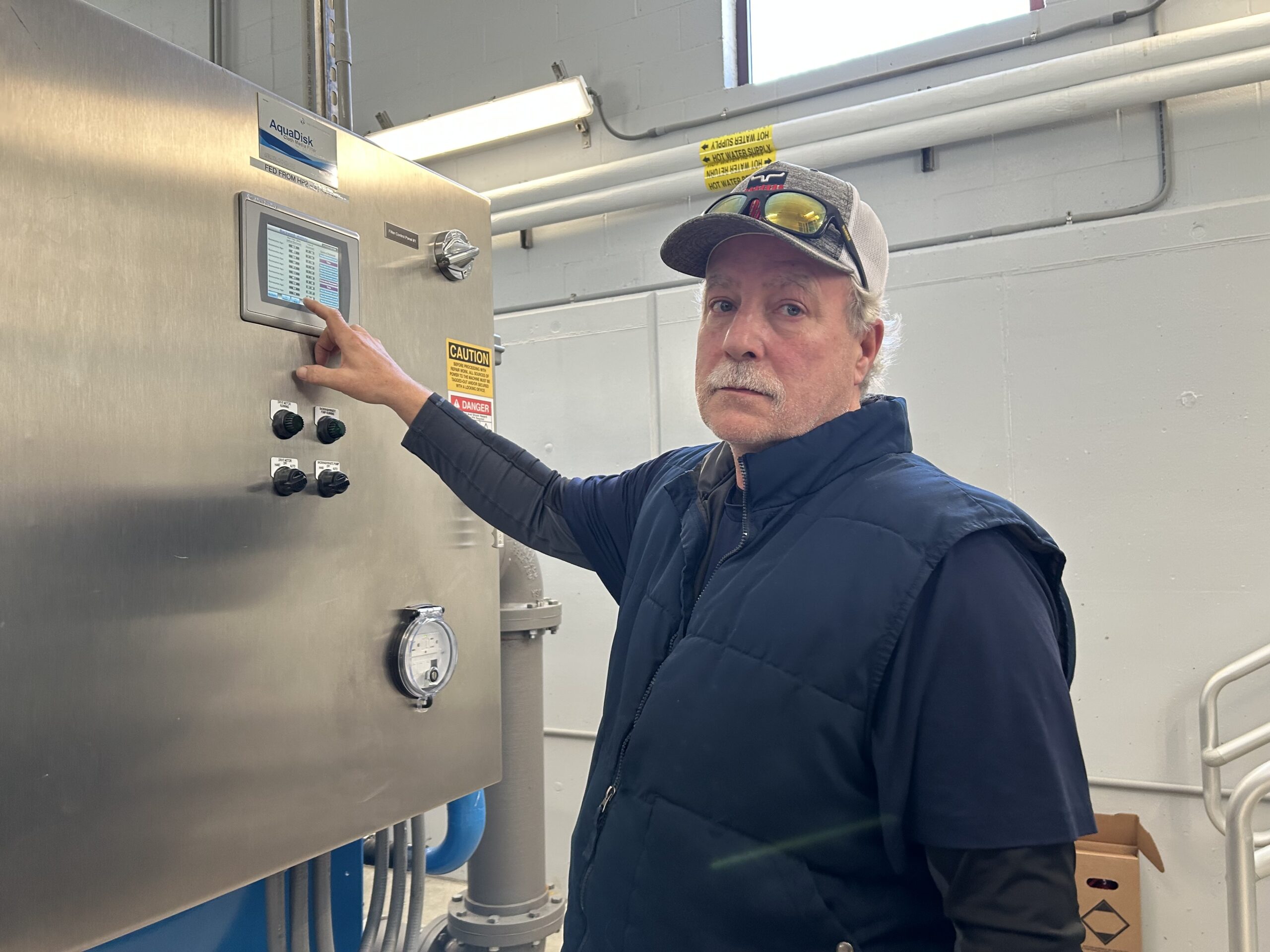
John Alexander
But equipment and engineering only get you so far. Someone has to know the system inside and out, which valves have personalities (yes, even new ones), which readings signal trouble before trouble arrives, and how the bacteria are settling into their new home. That someone is John Alexander.
During those early days and nights, he watched the effluent improve incrementally, each test showing lower nutrient levels than the day before. By the 37th day of operation, results were consistently exceeding state water quality requirements across all permit parameters. The discharge flowing toward Lake Champlain was cleaner than anything Hinesburg had ever produced with no chlorine, minimal phosphate, and barely a trace of ammonia.
The plant now handles around 190,000 gallons daily, with capacity to spare for the hundreds of new housing units breaking ground this spring. Ratepayers now look forward to financial reprieve; the burden will ease when the customer base grows.
For John, though, the reward isn’t in the permit limits or the rate structure. It’s in knowing that the water leaving his facility is safe for Vermonters, the LaPlatte, and the lake beyond. Some clock in and clock out. Others, like John, truly make a difference for the community they serve through dedication and diligence. Thank you, John.