

by Brad Roy
This article was published in the fall 2025 issue of our newsletter.
As the Source Water Specialist for Vermont Rural Water, I’ve had the opportunity to visit and conduct field inspections in many source protection areas across the state. One trend I’ve consistently observed is that many of Vermont’s source protection areas (SPAs) are rural and forested. These landscapes offer numerous benefits: they act as large-scale natural filters, reduce erosion and sedimentation, and help systems save on treatment costs by providing a first layer of treatment before the water even reaches a utility’s infrastructure.
However, rural, forested landscapes also attract various user groups such as mountain bikers, skiers, and ATV riders—all of which have the potential to cause risks to source water quality. These are often noted in systems’ source water protection plans.
But there’s one group of users in these rural SPAs that is frequently overlooked and often causes significant challenges to source water: beavers.
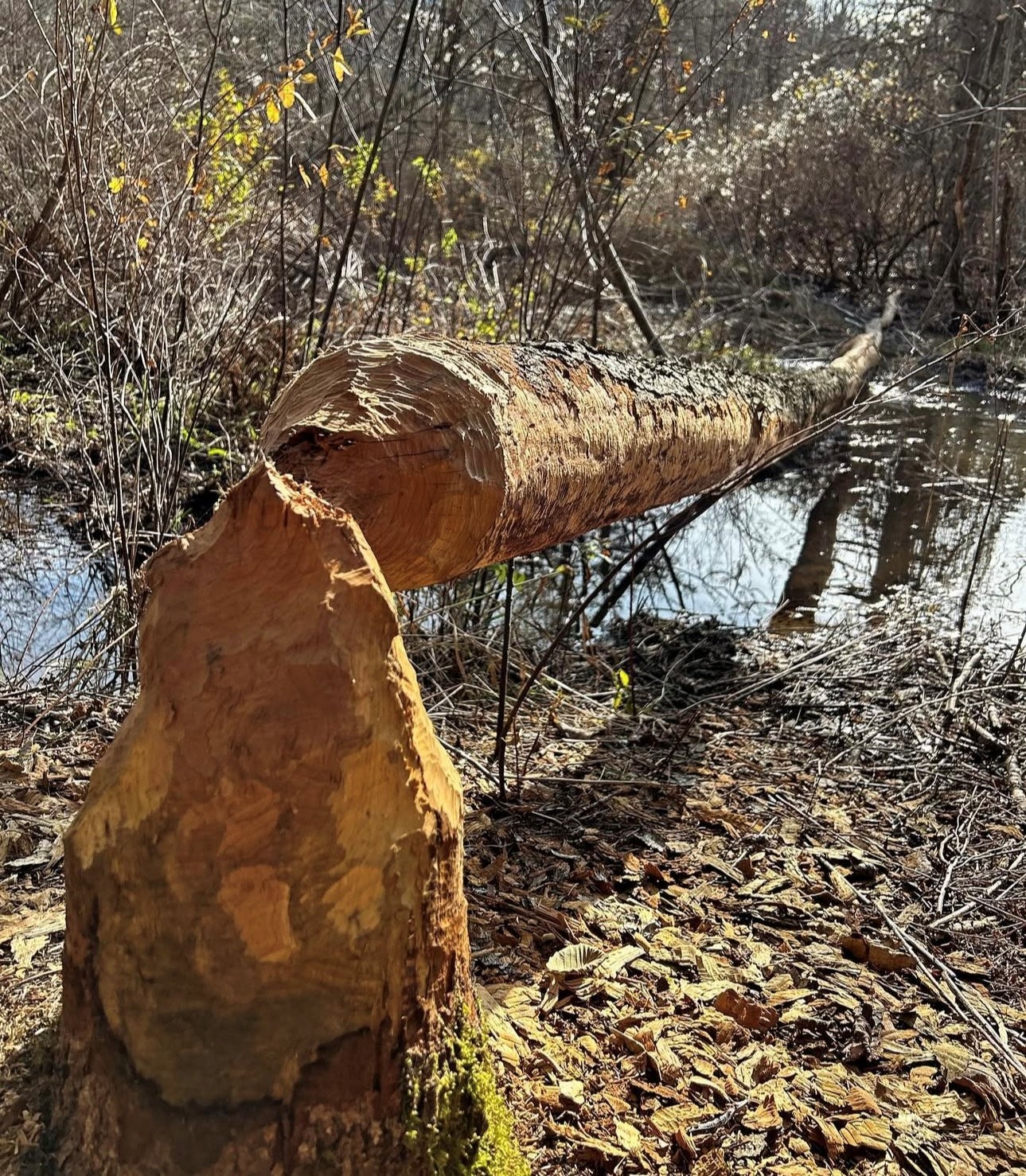
Beaver-caused tree damage in a source protection area.
A Resilient Return
Nearly eliminated from Vermont by the mid-1800s due to unregulated trapping and deforestation, the American beaver (Castor canadensis) was reintroduced to Vermont in the 1920s and 30s. By the 1950s, they had become reestablished, and thanks to careful management and habitat restoration, beaver populations are now thriving across the state according to the Vermont Fish and Wildlife Department.
Beavers are considered a keystone species because of the profound ways they shape their environment. However, their dam-building activities—while impressive—can cause serious complications when they occur within a drinking water source protection area. Many operators and utility personnel are either unaware of beavers’ presence or lack understanding of the impact beavers might have on their source water and infrastructure. So, lets dive into a few potential issues to consider if your utility finds itself sharing territory with North America’s largest rodent.
Flooding and Infrastructure Damage
One of the most common problems beavers cause for humans is a result of their relentless modification of existing hydrology. A single beaver family can build as much as 35 feet of dam in a week according to the Vermont Fish and Wildlife Department. In source protection areas, their dams can alter surface and groundwater flows, plug culverts, flood roads and bridges, and introduce sediment, nutrients, and pollutants into wells, springs, or surface water intakes.
Due to their rapid reproduction and tenacity, these issues are often recurring and can be costly for water systems to mitigate—both in time and resources. Most public works crews in Vermont have plenty of stories to tell about ongoing battles with the unwanted flooding and infrastructure damage brought by beavers, and mitigating these issues can often be expensive and laborious.
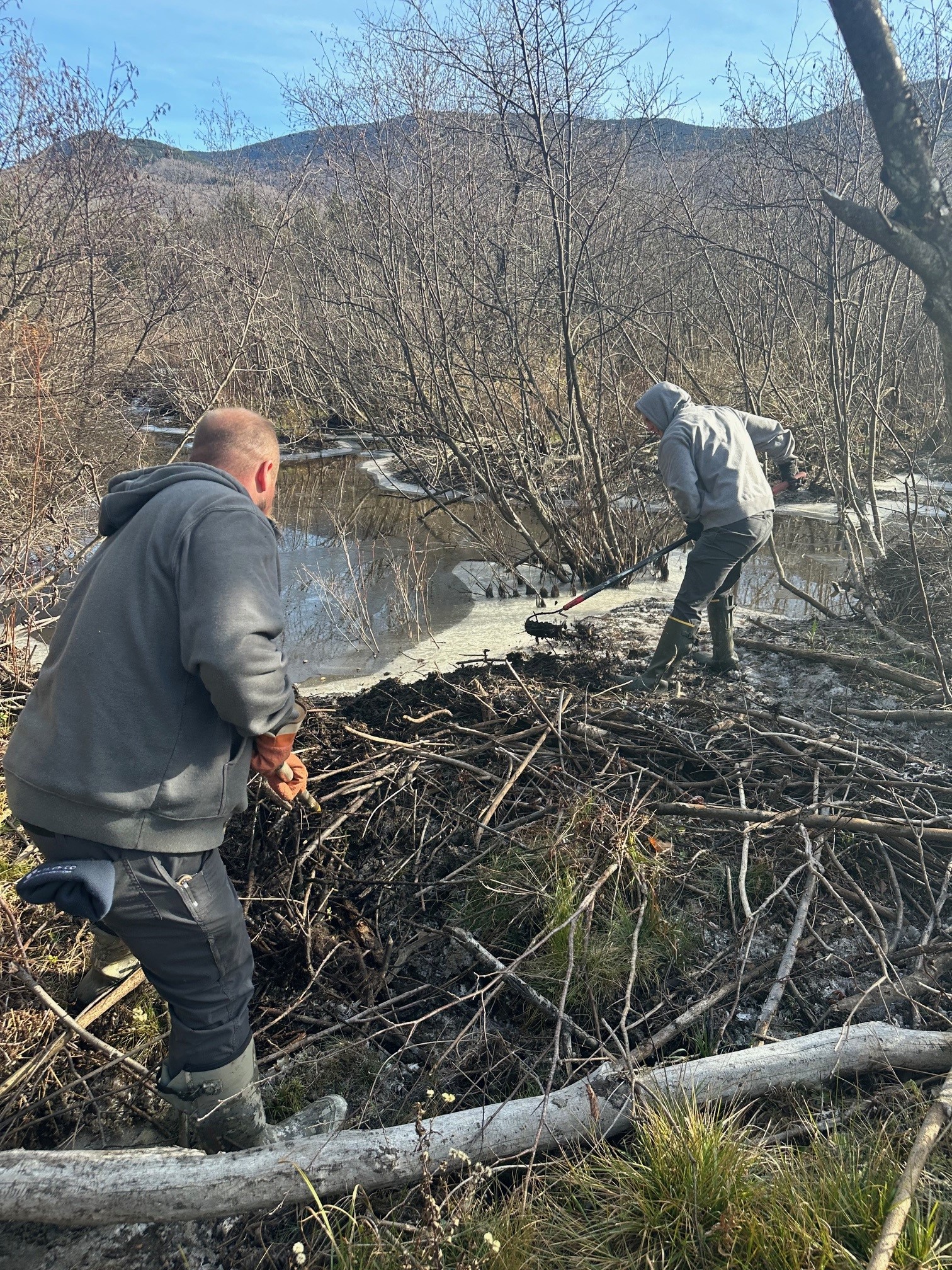
Water system personnel work to remove beaver debris from a source protection area.
Pathogens in Source Water
Beavers are known carriers of Giardia lamblia and Cryptosporidium, both of which can cause serious waterborne illness. According to the Mayo Clinic, giardiasis (an intestinal infection caused by the microscopic parasite G. lamblia) is one of the most common causes of waterborne disease in the U.S. Giardia can be spread through beavers’ fecal matter and be transmitted to humans, aptly earning the infection it’s nickname “Beaver Feaver”.
Cryptosporidium oocysts, which can also be shed from beaver feces, are also widespread and persistent in the environment and require only a small dose to infect humans. These organisms are of great concern to water utilities, as their small size and resistance to disinfectants like chlorine makes them particularly challenging to treat. The most notorious outbreak occurred in Milwaukee in 1993, when an estimated 400,000 people became ill after cryptosporidium oocysts passed through the filtration system of one of the city’s water treatment plants, according to the US EPA.
Although most modern treatment systems are designed to remove these pathogens, elevated concentrations in source water increases the risk of contamination in the event of treatment failure or system compromise.
Impacts on Water Quality
Beaver dams flood the upstream flow area, slowing water movement and increasing water temperature. This inundation causes a release of dissolved organic carbon that was previously bound in the soil and also floods terrestrial vegetation, leading to an accumulation of leaves, debris, sediment, and organic matter that would otherwise be flushed downstream (Was et al., 2025).
With a surge of organic material beginning to decompose in the new beaver pond, oxygen demand increases significantly in the now-stagnant, warmer pool. This can cause anaerobic conditions, leading to the production of methane and other unwanted compounds—similar to processes we seek to avoid in a wastewater treatment plant (Johnston, 2013).
Additionally, beaver activity increases nitrogen and phosphorus cycling. These nutrients fuel algal blooms, which further complicate water chemistry and treatment downstream and in our facilities (Brazier et al., 2020).
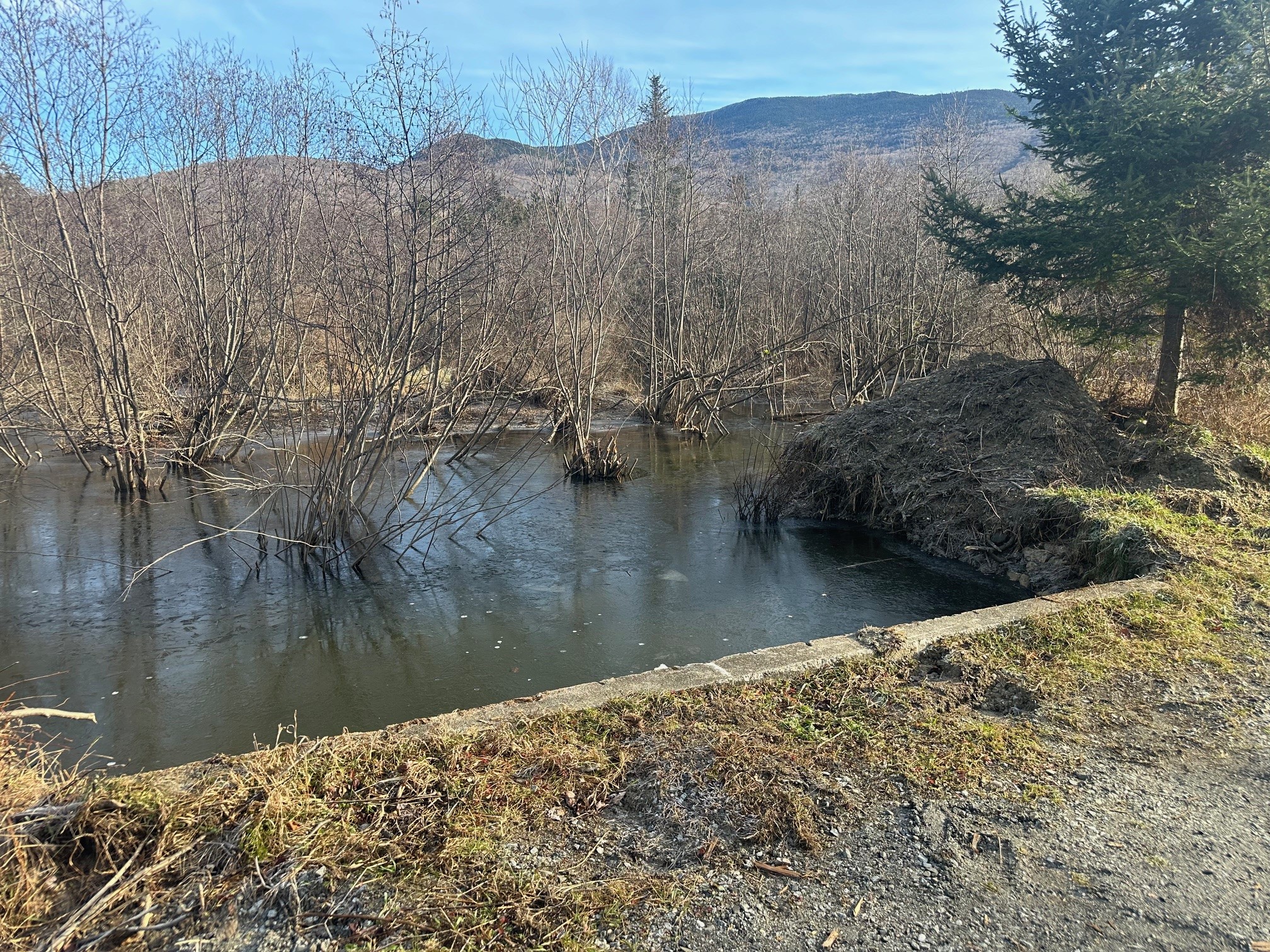
A culvert plugged with beaver debris.
Erosion and Vegetation Loss
Beavers primarily feed on trees’ cambium, the soft inner bark layer. To reach the cambium, they must fell trees.
In source protection areas, this is cause for concern. Trees play a vital role in stabilizing stream banks, hillsides, and soils. When beavers fell these trees, it destabilizes the root systems that hold soil in place. Over time, this can lead to increased erosion, sedimentation, and loss of bank structure.
In sensitive areas, the destruction of tree networks may result in long-term damage to water quality, flood resilience, and infrastructure integrity. All are major issues for water utilities to be aware of and mitigate when possible.
Balancing Ecosystem Health and Public Safety
Beavers are remarkable animals, and their role in ecosystem restoration is invaluable. We continue to learn new ways in which they contribute positively to important ecological functions like biodiversity, wetland health, and water storage. Their resurgence in North America is a conservation success story, and we are fortunate to have robust populations throughout North America once again.
However, as both beaver and human populations expand, it’s important for water professionals to be aware of the risks beavers pose to drinking water systems. Protecting public health must remain a top priority, and being aware of what’s happing in your SPA is a critical first step.
In my field visits, I’ve often found that systems are unaware of the extent to which beavers may be impacting their infrastructure or water quality, or that they are even there in the first place. It is important to diligently monitor your system’s SPA and remember that an ounce of prevention is always worth at least a pound of cure. Identifying and mitigating potential hazards at the source (or before) is far more effective than trying to solve problems with treatment technology and infrastructure.
If you have concerns about wildlife activity in your source protection area, please contact me at broy@vtruralwater.org to schedule a site visit. I can provide tools, tips, and technical guidance to help manage the situation safely and effectively.
Sources
“The effect of beaver ponds on water physico-chemical composition in the Carpathians (Poland and Slovakia).” Joanna Wąs1, Joanna P. Siwek2, Małgorzata Kijowska-Strugała1, Elżbieta Gorczyca2 5 10 15 20 25 1Department of Geoenvironmental Research, Institute of Geography and Spatial Organization, Polish Academy of Sciences, św. Jana 22, 31-018 Kraków, Poland 2 Institute of Geography and Spatial Management, Jagiellonian University in Kraków, ul. Gronostajowa 7, 30-387 Kraków, Poland. https://egusphere.copernicus.org/preprints/2025/egusphere-2025-1184/egusphere-2025-1184.pdf
“The use of a geographic information system to analyze long-term landscape alteration by beaver.” Carol Arlene Johnston
https://www.researchgate.net/publication/225440521_The_use_of_a_geographic_information_system_to_analyze_long-term_landscape_alteration_by_beaver
“Sediment and nutrient storage in a beaver engineered wetland.” Alan Puttock , Hugh A Graham , Donna Carless , Richard E Brazier https://pmc.ncbi.nlm.nih.gov/articles/PMC6175133/