Why and How it Should Be Treated
by Miles E. Waite, PhD, PG (Waite-Heindel Environmental Management)
This article was published in the winter 2025-26 issue of our newsletter.
In Vermont, manganese is a common mineral found in rocks, soil, groundwater, and some surface water. It can be problematic for both public water systems with a groundwater source and private wells.
A 1980s USGS study of Vermont aquifers identified that crystalline bedrock aquifers, which are common throughout Vermont, have the highest prevalence of manganese as compared to less common carbonate bedrock and gravel aquifers.
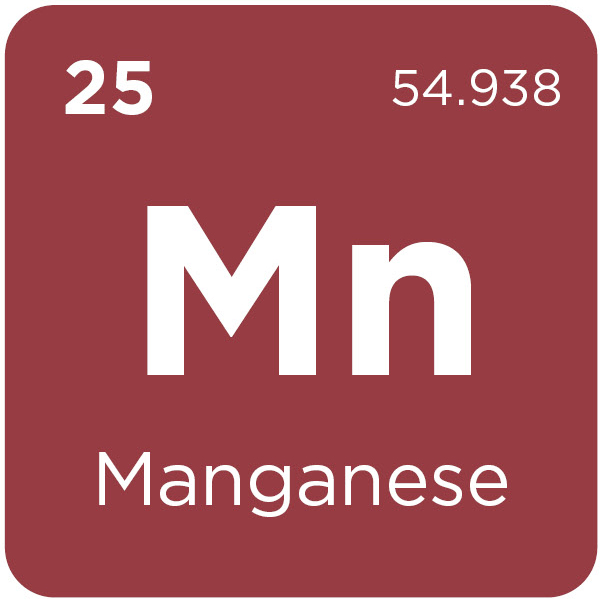
Manganese is a metal that can be a naturally occurring or non-natural contaminant in groundwater.
The concentration of manganese in groundwater can fluctuate with changes in temperature and geochemical conditions. Manganese can also be present in groundwater as a non-naturally occurring contaminant, for instance leached from mine tailings, such as at Vermont’s Elizabeth Mine Superfund Site.
At low doses, manganese is essential for human health, as it is a mineral required for many metabolic and cellular functions. However, at high doses over a long time, manganese exposure can harm the nervous system.
The Vermont Department of Health (VT DOH) has issued a Vermont Heath Advisory (VHA) for manganese at 0.300 mg/L. The VT DOH warns that special care should be taken to avoid making infant formula with water containing a manganese concentration above the VHA.
However, the EPA has not promulgated a primary maximum contaminant level (MCL) for manganese, which would be for health-related concerns. Instead, the EPA regulates manganese as a secondary contaminant due to aesthetic concerns, which include metallic taste, black staining of fixtures, and mineral build-up within plumbing systems. The EPA’s secondary maximum contaminant level (SMCL) is 0.05 mg/L.
There are several ways to reduce manganese in well water, for both private wells and public water systems. One method is modification of the well. If it is possible to identify a specific fracture, or fracture zone, that is transmitting the manganese-laden water into the well, then casing sealing or well packers could be used to isolate the zone and improve overall well water quality.
The other method is water treatment. Both ion exchange and chemical oxidation are commonly used to reduce manganese in water. In ion exchange systems, also known as water softeners, the water flows from the well through resin beads to which metals, including manganese, adhere. The resin beads are regularly regenerated by flushing with a saltwater brine which flushes out the ions.
For residential use, it is important to note that the backflush liquid needs to be discharged. It should not be piped to a conventional septic system typical of Vermont homes.
In chemical oxidation systems, a chemical oxidant, often potassium permanganate, is added to the well water causing the manganese to precipitate out of solution. The water is then forced through a filter, often comprised of sand and catalyzed carbon, to capture the precipitated manganese. Sand filters can also require regular backflushing and regeneration.
Miles E. Waite, PhD, PG is the Principal Hydrogeologist at Waite-Heindel Environmental Management (WHEM) in Burlington, and specializes in groundwater studies and contaminant hydrogeology. WHEM has been an active member of VRWA for many years.