by Aaron Perez
This article was published in the winter 2025-26 issue of our newsletter.
After the drought challenges we have had this summer, I thought it would a good idea to revisit this article that I wrote back in 2012. I spent a lot of hours this summer looking for very small leaks, some a gallon per minute or less. I did this because systems experiencing water shortages from the drought could not afford to lose any water at all.
So this article is a reminder to stay vigilant and keep a close eye on your system this winter. Who knows what next year will bring!
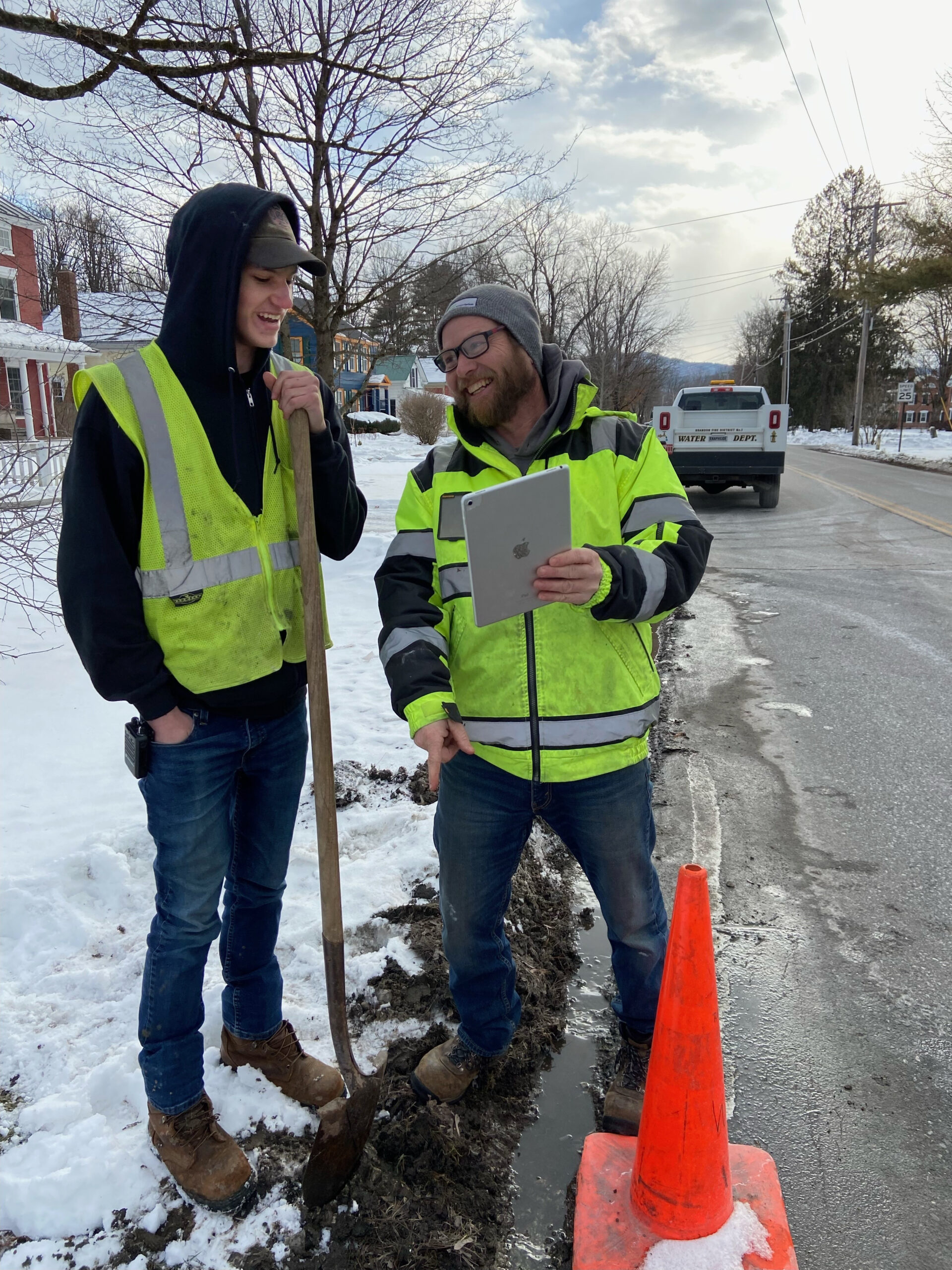
Aaron Perez (right) and Bradley Danforth find a line at Brandon Fire District #1.
If your system is metered, it is important to take the time compare your water production with your water usage to get a sense of how much water is being lost. There are a number of water auditing software tools available online ranging from free to several hundred dollars.
Also consider authorized but unmetered usage in the system, such as water lines feeding town properties like cemeteries or recreation fields. Look back on the previous year’s usage for the same month or quarter and compare it to the current usage after subtracting the totaled billed usage. This is a great way to keep an eye on whether unmetered usage is increasing, which could indicate a leak.
Small water systems without customer meters have a greater challenge detecting water loss. Closely tracking your water production and well pump run times is a great place to start. Be sure to compare these numbers to previous years because seasonal changes can influence the way people use water.But without knowing what the actual consumption numbers are, other techniques can also prove helpful.
Having service connections in the system with pressure gauges located in accessible places—and before pressure reducers—can give a water operator a way to check system pressure fluctuations, which can indicate problems such as leaks in the distribution system.
Public education can also be a valuable tool to an operator. Educating customers about signs of water leaks such as low pressure, air in the water line, and dirty water is important. A customer may not (and often times doesn’t) report minimal decreases in pressure or a small amount of air in their lines. Many small water systems are alerted to leaks when a member of the public reports either low water pressure or water surfacing on a roadway.
Keeping a vigilant eye and ear out for signs of trouble can not only save a system money, but can also save an operator from having to do unplanned repairs which seem, in my experience, to happen late at night, in the freezing cold, or on Friday afternoons.