by Tim Russo
This article was published in the Spring 2026 issue of our newsletter.
We’re sometimes asked if Vermont Rural Water Association can perform water storage tank inspections. The short answer is yes, but first, a bit about what constitutes an “official” inspection.
The Vermont Water Supply Rule states:
“All water storage tanks shall be comprehensively inspected, inside and out, every 5 years, except for newly constructed, newly painted (inside), or newly reconditioned tanks (inside and outside), which shall be inspected within 10 years of service and every 5 years thereafter. The inspection of the outside of a buried or partially buried tank may be limited to exposed portions. The inspection, findings, and servicing documentation shall be retained in the water system’s files for review upon request.”
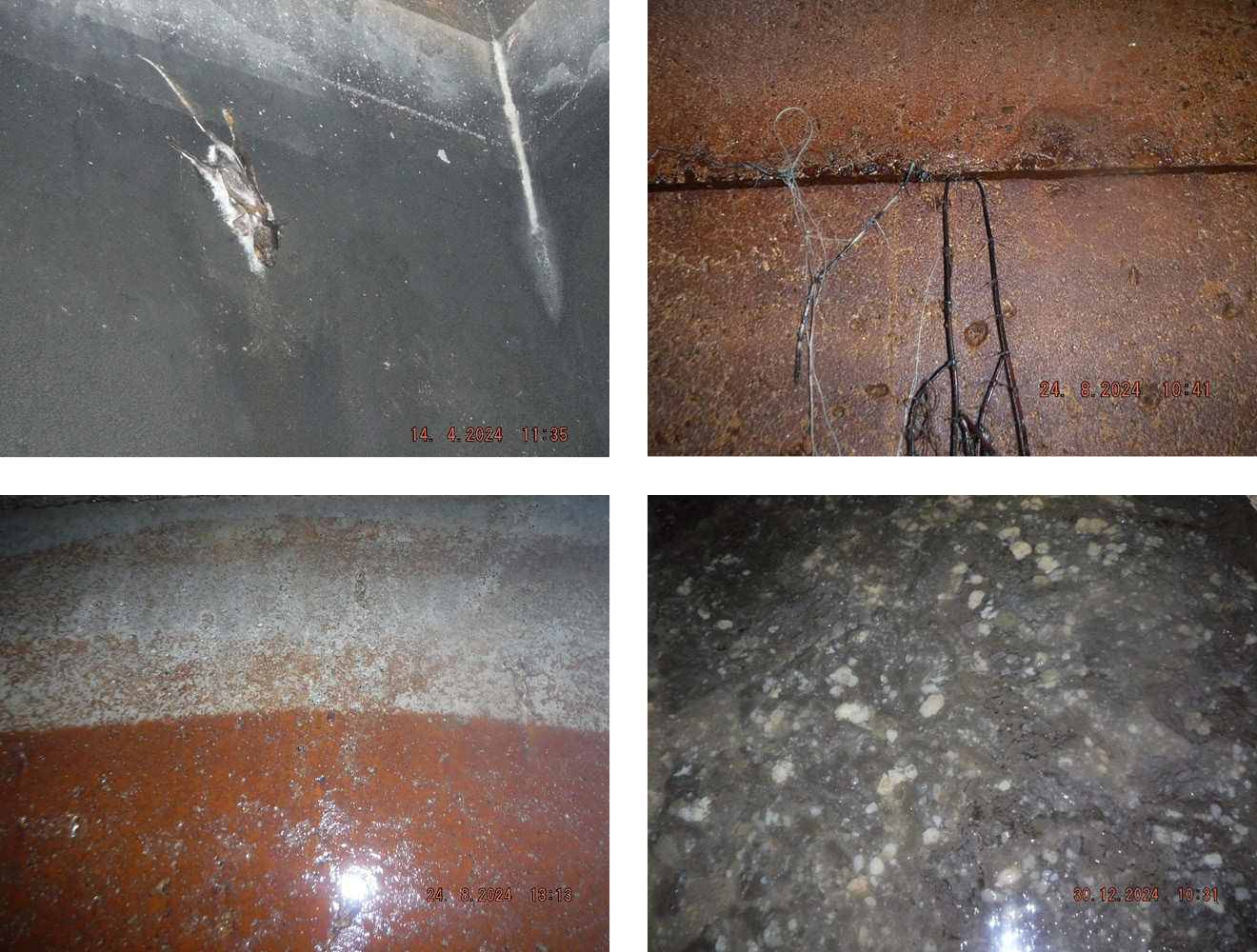
Clockwise from top right: a dead mouse stuck to the wall of a tank after an access hatch was left open; root infiltration into a storage tank; sludge from over-coagulation in a clearwell; bioslime before (bottom) and after (top) power washing. Photos provided by Paula Jackson.
Anyone can perform these inspections effectively, providing they know what to look for. EPA offers comprehensive checklists, but for small in-ground storage tanks, here are a few basic suggestions.
Operators should routinely open the hatch and shine a flashlight inside to see if there are signs of anything obvious such as floating debris, insects, or animals. If the bottom or sides of the tank can be illuminated, the operator should take note of the appearance.
Don’t forget to also inspect the hatch, vents, and overflows. The hatch—which should normally be kept locked—should have an adequately functioning seal/gasket to prevent outside infiltration, such as insects and spiders. Overflows should be located in areas where they will not be affected by flooding (18” above grade). Vents should be downward facing. Overflows and vents must be covered with a minimum #24 mesh non-corrodible screen.
When it comes to more thorough tank inspections, you may want to reach out to us. Vermont Rural Water has several types of cameras that can be used to take videos and pictures of the conditions inside a tank, with no need to enter or drain the tank. We do recommend shock chlorinating the tank after a camera inspection.
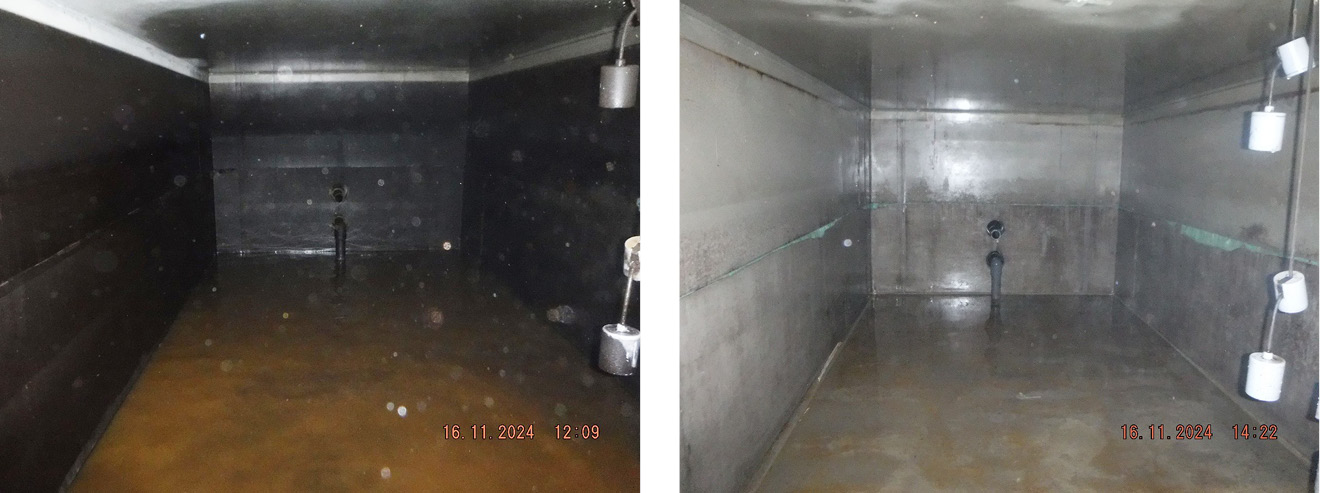
Storage tank before (left) and after (right) cleaning. Photos provided by Paula Jackson.
We will supply the operator with these photos and videos so that they can then present them to the appropriate Drinking Water and Groundwater Protection personnel if asked, such as during a sanitary survey. (We do not provide a report of our findings to DWGPD unless requested to do so by the operator.)
If the tank is found to be in need of a cleaning—a determination which will initially be made by both Vermont Rural Water and the operator at the time of the inspection—then next steps can be discussed at that time.
To request a tank inspection, call 802-660-4988 or email info@vtruralwater.org