
by Harry Dunn-Davenport
This article was published in the fall 2025 issue of our newsletter.
Fire hydrants are some of the biggest assets to small water systems, yet they are also some of the largest liabilities. As all operators know, flushing fire hydrants can be a little anxiety-inducing. “Is it going to flow like it did last year?” “Is this hydrant going to close all the way?” “Why does water pour out of the ground when I open the hydrant?” “Why are we doing this on a Friday?” These are just a few of the most common concerns I hear about flushing hydrant systems.
Proper hydrant maintenance is important to a well-run water system. For a firefighter, a well-maintained fire hydrant can be the difference between saving a building and watching it burn to the ground. For a water operator, routinely flushing fire hydrants can provide valuable information about the water system.
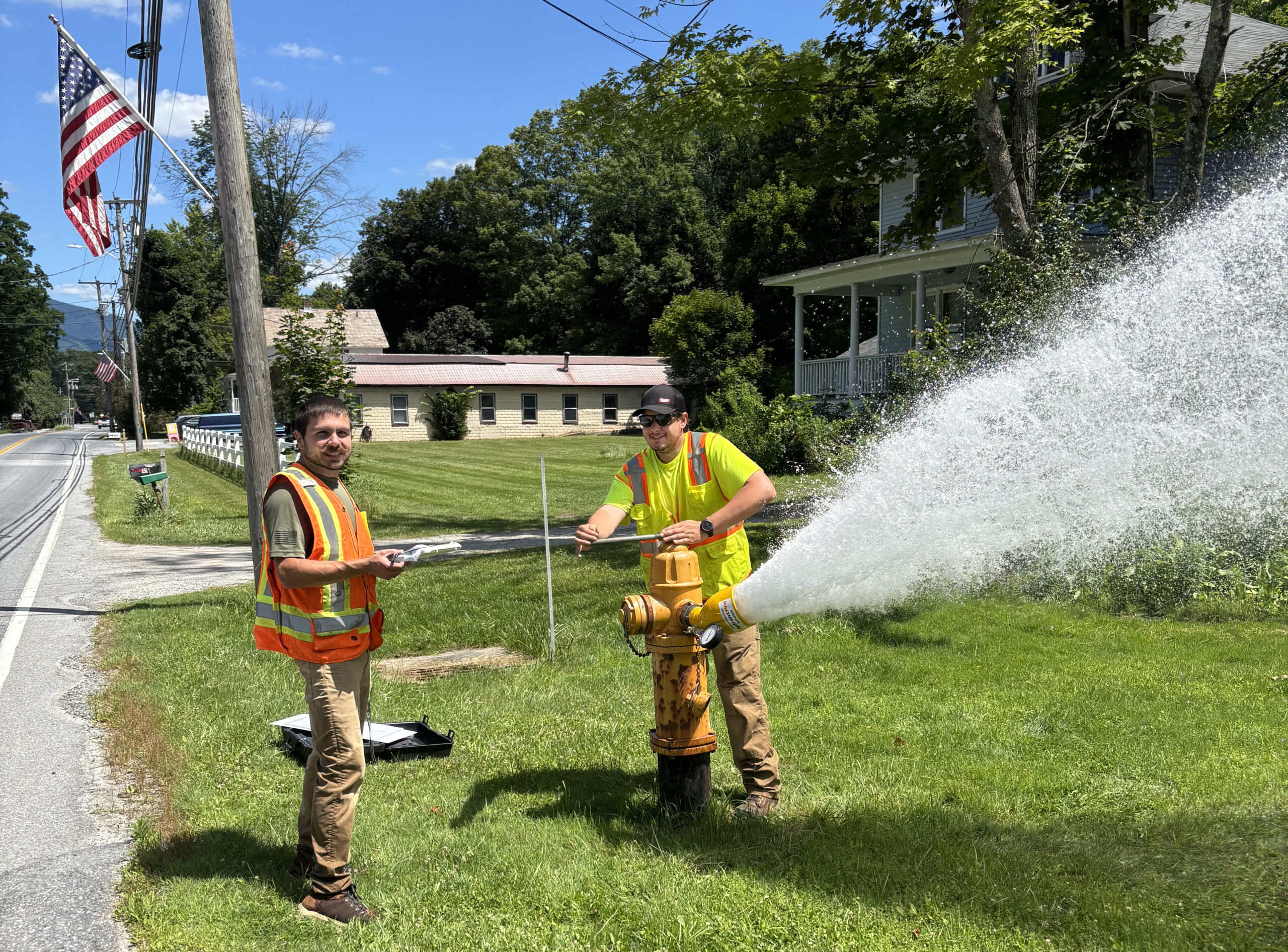
Eric DePhillips (left) and Josh Brace flush a hydrant in Arlington, VT.
Since I started working for Vermont Rural Water in February, I have assisted in town-wide hydrant flushing tests. These tests do more than just move water through the system.
Flushing fire hydrants can provide a lot of information about a water system that we may not know and can also confirm what we already do know, like main pipe size and rate of tuberculation build-up. It can also help determine if flushing has been frequent enough to minimize customer complaints about dirty water. Lastly, hydrant flushing can help operators develop asset risk assessments based on the condition and age of hydrants being tested.
I recently had the opportunity to work in Arlington with chief operator Josh Brace and representatives from Otter Creek Engineering, Zach Golden and Eric DePhillips, P.E. Arlington had hired the engineering firm to conduct a comprehensive hydrant flow study.
Eric and Zach set up pressure data loggers on specific fire hydrants. The loggers collected pressure along with flow data from the flowing hydrant. When plugged into a hydraulic model, the data shows whether the pipe size indicated on the system’s mapping records is accurate. An accurate map is an indispensable resource, and as all operators know, water system maps are not always accurate or up-to-date.
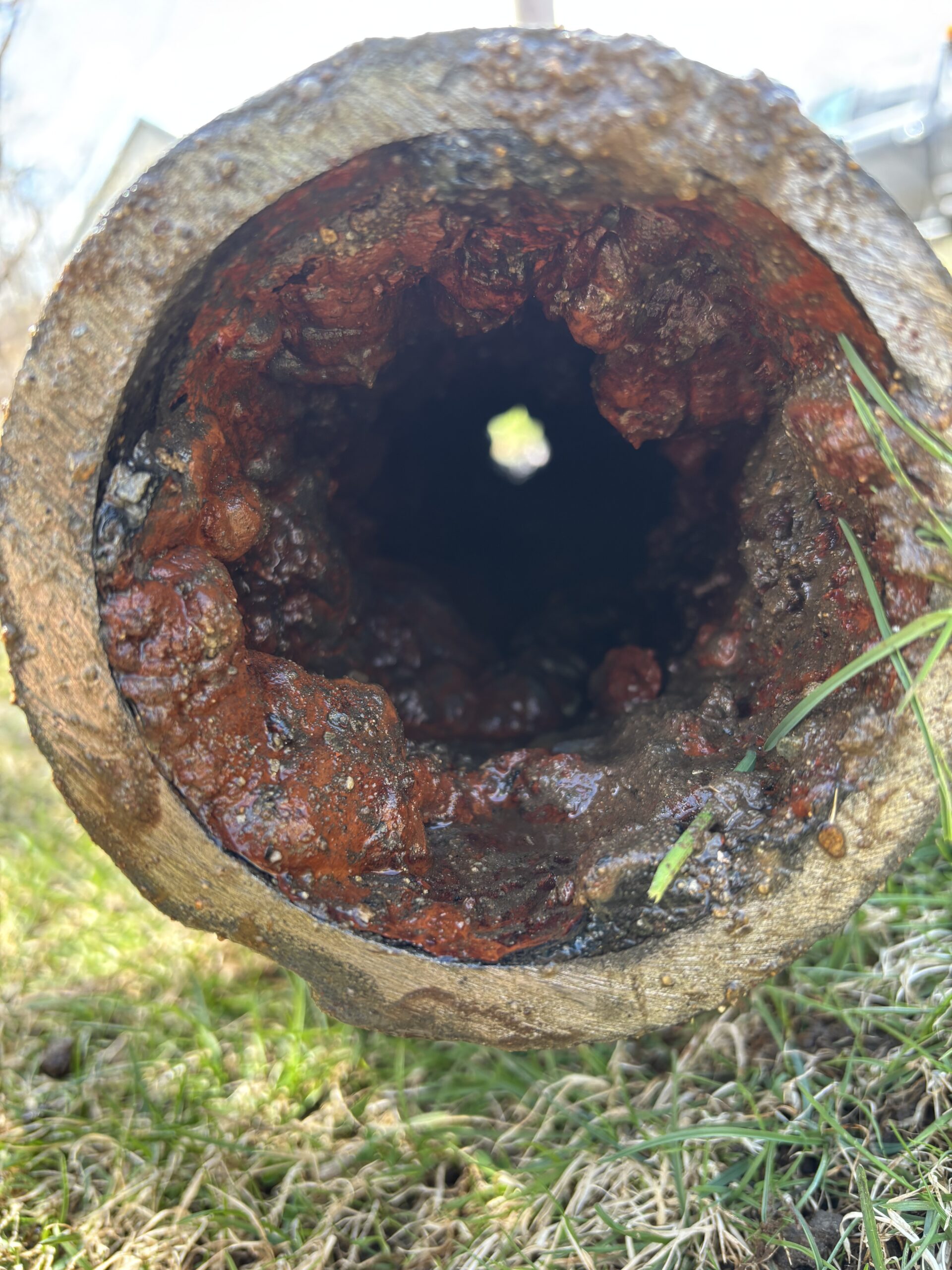
A 4-inch cast iron pipe installed in 1912. Tuberculation reduced the diameter to approximately 1.5 inches. Flow was reduced by 83% from 480 gallons per minute (GPM) to 80 GPM with additional headloss due to the corrosion.
Having a complete hydraulic model approved by an engineering firm can move a system up the priority list for receiving state and federally funded grants. As the saying goes, “You gotta spend money to save money,” and this rings true when conducting a flow study and creating a system hydraulic model.
In my previous role with Simon Operation Services, I had the privilege of learning proper and very thorough fire hydrant maintenance and flushing technique. Keeping a record and recording new data can tell you a lot. I have put together some Excel spreadsheets to help keep track of hydrant flow data and maintenance. These spreadsheets have been added to Vermont Rural Water’s website under “Drinking Water Links and Downloads.” If you have any questions or need any help, please don’t hesitate to call or email.